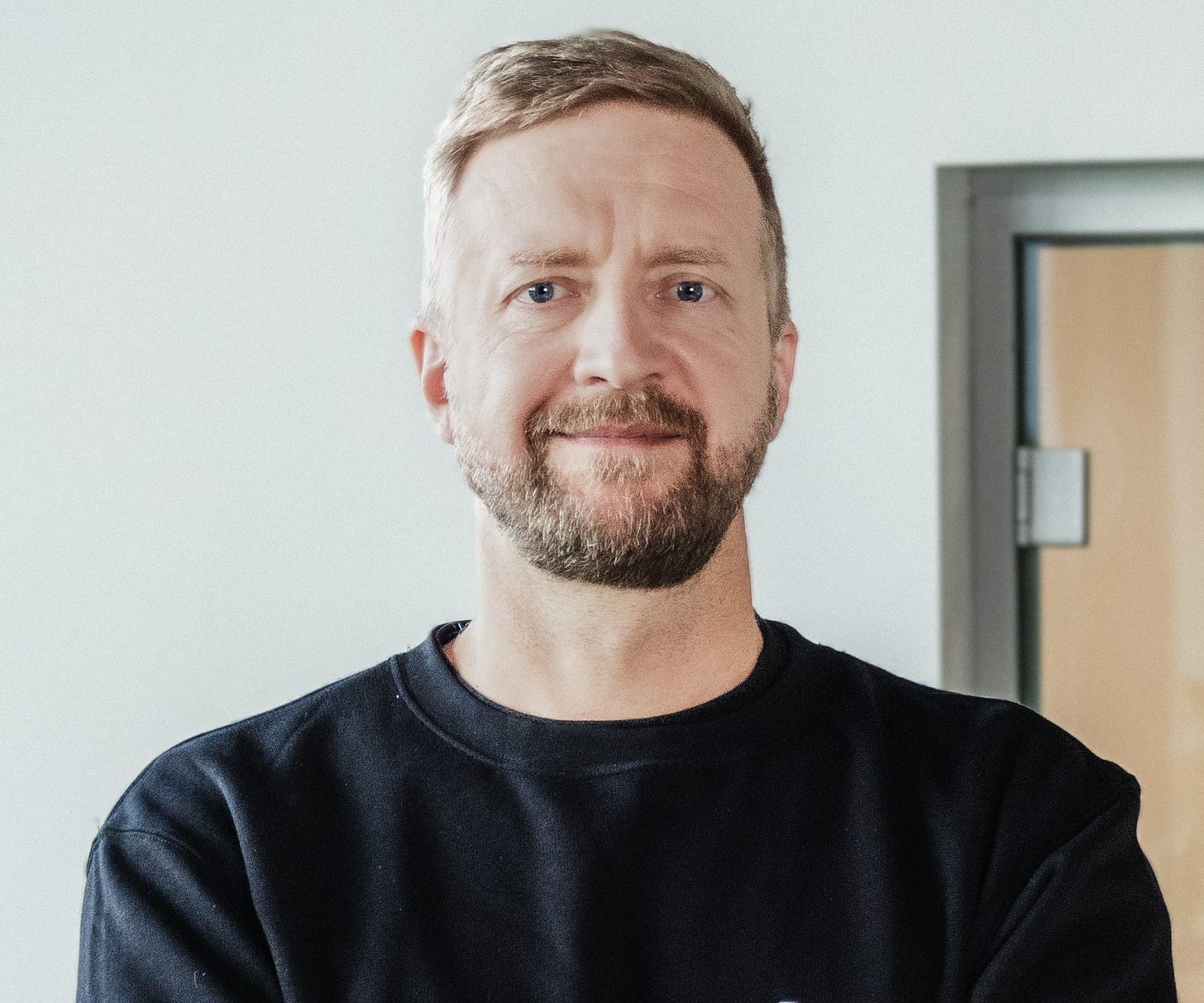
Andres Anijalg was running a $2.3 billion power plant project in the Middle East when he decided to leave it all behind and start making roofs.
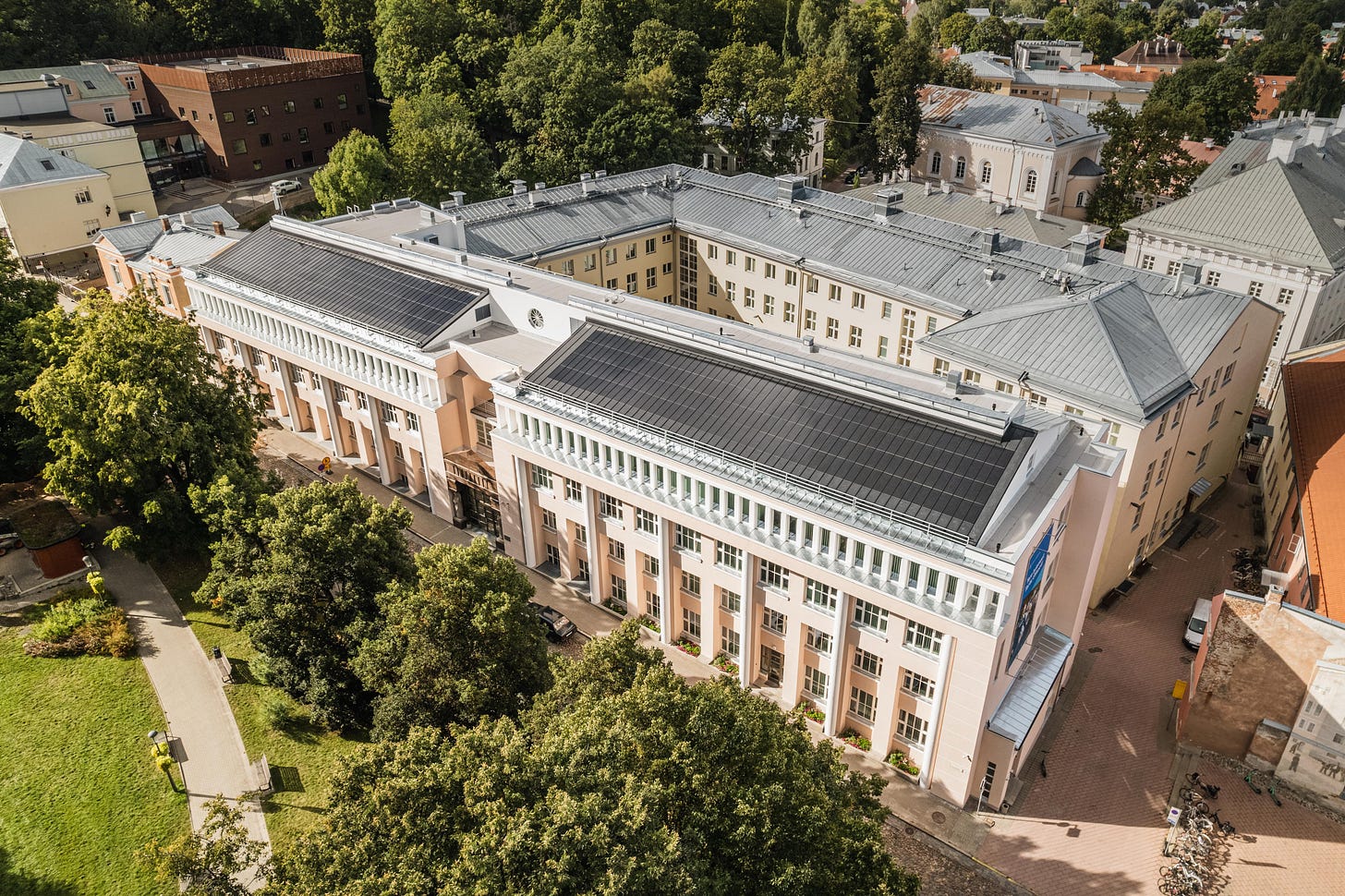
Not panels. Roofs. The distinction matters. Roofit.Solar, the Estonian cleantech company he co-founded in 2015, makes building-integrated photovoltaic (BIPV) roofing – metal panels with solar cells embedded directly into them, designed to replace the roof itself rather than sit on top of it. One product, one installation, a roof that quietly generates electricity without looking like it does.
The market he’s building in is accelerating fast. Valued at $24 billion in 2023 and projected to reach $90 billion by 2030, the BIPV sector is being driven by tightening energy efficiency regulations, rising electricity costs, and a generation of homeowners and architects who are done accepting the trade-off between aesthetics and clean energy. Last year, North America alone was expected to account for 39% of global BIPV adoption – which is precisely why Roofit.Solar has just made its US debut.
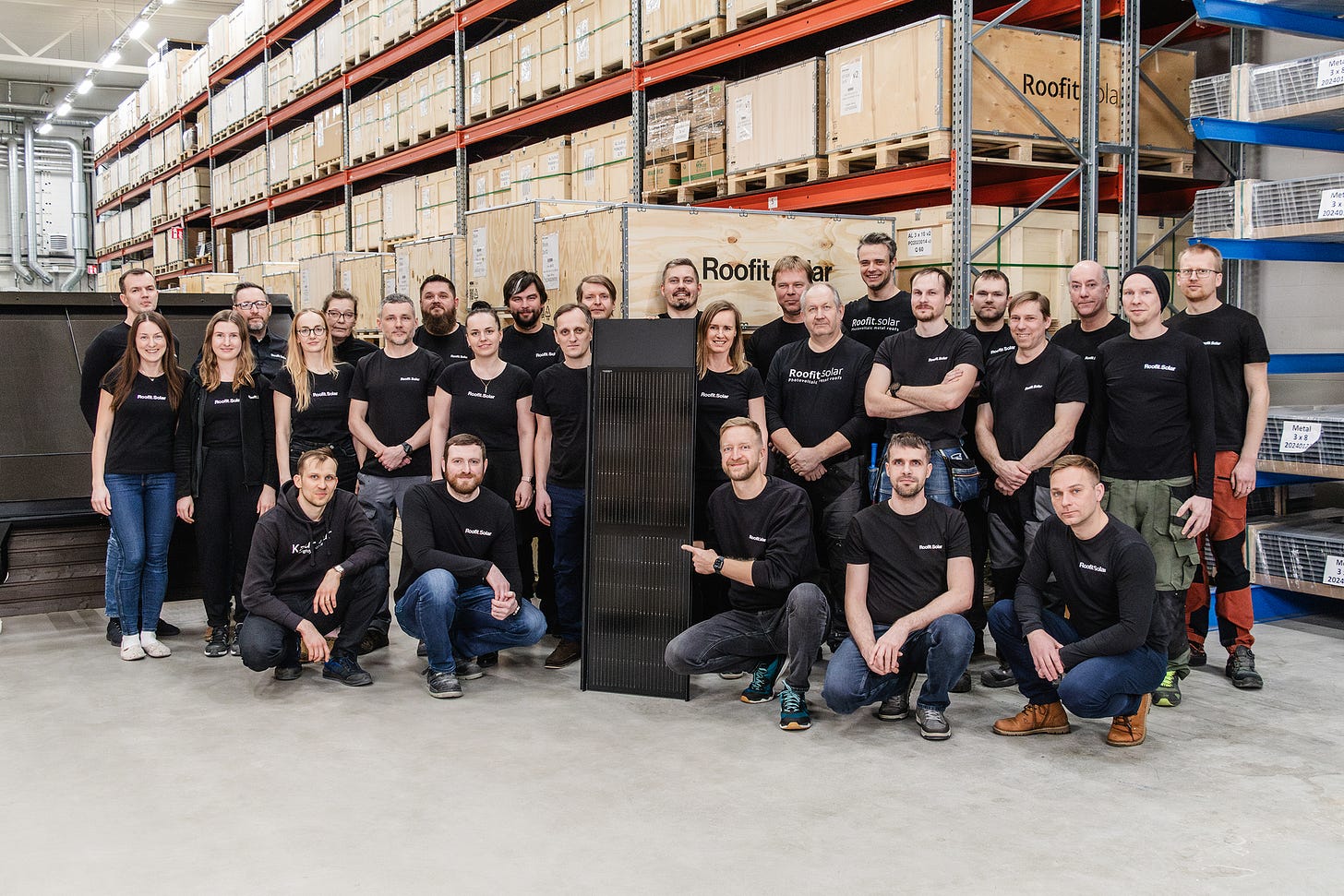
In ten years, Roofit.Solar has installed more than 3,000 roofs across 30 countries, grown export volume by 90% in 2024, and raised €6.45 million in Series A funding. It has also won the Red Dot ‘Best of the Best’ design award, hit break-even, restructured its team, and learned some hard lessons about what it actually takes to scale a hardware company. Andres talked us through all of it.
You left a $2.3 billion power plant project to start making solar roofs. What actually happened?
“The idea started from a very personal need. I was planning a new roof for my own home but didn’t like the ‘spaceship-style’ solar panels typically mounted on top. Around the same time, I met a scientist who had built exactly the kind of integrated solar roof I had imagined, in his garage. That moment didn’t feel like a coincidence. It felt like the beginning of something.
Professionally, the timing also made sense. I was working as CEO on that power plant project in the Middle East, but by then solar had already become significantly cheaper than fossil energy and was clearly scaling fast. I decided to leave that role and start building something from scratch.
What convinced me most was the bigger vision: instead of centralised power plants, every roof can become a small power station. That shift makes energy cleaner, more resilient, and more independent, and it’s simply the direction the world is moving.
You’ve just hit ten years – in a sector where many startups haven’t survived. What’s been the defining difference?
One element is simple: clean energy hardware companies need patience. It always feels like you can be growing faster, but successful scaling takes time and the right approach.
Another aspect is that some hardware startups are trying to disrupt their industries from the outside, competing with tradition instead of collaborating. We learned along the way that we should be trying to develop our offering from the inside – by engaging those already operating in the solar industry, installers, architects and roofers, we’ve been able to educate the market more broadly and help it evolve to meet innovation, rather than trying to force change.
You focus heavily on aesthetics – how important is design in driving adoption beyond early adopters?
The benefit of choice certainly helps the developing solar market reach a wider audience, and the appearance of our roofs is what helps us get noticed. It’s an example of solar being done differently and exceeding expectations.
While well-designed solar needn’t be a luxury, solar that looks good almost makes it aspirational to those who appreciate aesthetics but aren’t so swayed by the environmental or energy cost saving elements. It also helps architects, who increasingly have energy efficiency criteria to meet but are often keen to explore the most aesthetically pleasing solutions.
Nevertheless, most homeowners who reach us are actually not specifically interested in a beautiful solar roof, they just want a new roof. However, when they find out that their new roof can also generate clean energy and look discreet and stylish, Roofit.Solar becomes more interesting. Solar roofing is clearly being increasingly considered alongside standard roofing options, rather than as a specialist solution only for those with an interest in clean energy.
Solar doesn’t have to mean compromising on aesthetic standards anymore.
What did you get wrong in the early years that shaped how you build the company today?
We tried to grow too fast. We hoped to replicate the 3x annual growth that many software companies had achieved, but soon realised that it’s a different ball game with a hardware company. This influenced our spending decisions and, with the best intentions, we hired too many people too quickly and then had to do what no founder wants to – letting some go later down the line. We took our learning from that, restructured our whole operations and managed to reach break-even in 2025.
Was there a moment where you genuinely thought Roofit.solar wouldn’t make it?
All the time. I used to work with someone who quite rightly said that every project dies at least nine times. We’ve come up against a number of these scenarios – challenges like not having funding at the right times or facing technical issues with the product. The reality is these things pop up all the time in the startup environment, and all that really changes is that we find a solution and just keep going.
You made a strategic shift from selling direct to homeowners to selling through distribution partners. What triggered that?
As we scaled internationally, selling direct to homeowners became a bottleneck — the communication and customer care became too taxing for our team. We would have needed many more employees at a time when we actually needed to be making the team leaner.
We saw that by partnering with local distributors, we could utilise our respective strengths. Roofit.Solar can develop the product well, and local distributors have the local knowledge and customer bases to sell it well.
You’ve recently entered the US market with UL certification – why now, and why the US?
The US is one of the largest roofing markets globally. It has consistently been the biggest source of inbound enquiries from homeowners, even before we expanded there. The only reason we didn’t enter the market earlier is because we simply lacked the resources and funding to gain the necessary certifications and invest in the move.
However, the existing market demand combined with the opportunity to work with an on-the-ground distribution partner, ArcEdge, which had shown serious interest in officially partnering, made now a perfect time to finally move in. We’re now at ten roofs installed in the US with many more in progress.
How different is the US market compared to Europe?
The US has always been quite a strong market for solar roofing and the market is moving faster commercially than it is in Europe. With Tesla being a household name and supplier of integrated solar roofing, the market is more educated on the 2-in-1 integrated solar roofing solution and, it seems, open to innovation and adopting new ideas when it comes to clean energy.
There has been some evolution though – cheap materials have been popular for replacing roofs in the US historically, but consumers are realising that, with the 2-in-1 solution, making more of an investment now helps the roof to last longer and be resilient against extreme weather.
What have investors consistently misunderstood about your business?
Many investors we’ve spoken to over the years understand hardware well, and yet have not invested in us. Hardware takes longer to scale and is more capital intensive, which makes it harder to convince investors. The stumbling blocks have not been so much to do with the technical aspects of our solution, but more in explaining the operational challenges of gaining certifications, building supply chains and training installers.
Of the investors who have invested into Roofit.Solar, around a third actually have their own Roofit.Solar roof. Some got their solar roof installed and then came to us asking to invest because they could see for themselves how it looked. The difference with those who did invest was that they had a belief both in the product and in the vision that the future will be roofs that become power plants, and trusted our team to deliver.
What actually makes a climate hardware company investable today?
It’s a combination of things. In the early stages, it’s about storytelling and building trust – making investors see and believe in your vision and ability to deliver on it as a team. Then, as your business grows, you need to be able to demonstrate viability and potential with real numbers: margins, market trends, and strategy for how you will react to difficult times – fluctuating energy prices and the financing market. Your successes and navigation of startup life become proof points of your ability to continue scaling.
What’s the most common mistake you see climate founders making right now?
Companies running out of money too quickly. Too often, you have a strong idea and capable team, but they fail to keep their capital going or raise more. Closing a financing round is a great feeling, but also a great responsibility because it’s your time to start delivering, all while being careful with the funds.
Successful founders keep a long runway and make sure their financial decisions are the right ones. I learned this from my experience of hiring too fast with new capital. It’s also important that founders just keep going despite the hiccups and refuse to give up. That’s the approach I take and I’m still here ten years later.
When you meet a founder, what signals tell you they’ll actually execute?
A strong track record and having had a journey in entrepreneurship already is always promising. But there is also a spark that you see in some founders that says they genuinely love and believe in what they are doing. You can see it on their face when they talk about it. If they seem unsure and don’t show that enthusiasm, it’s harder to be convinced. So it’s largely a gut feeling.
Rapid-fire
Your Mantra? “Slowly, slowly catch your monkey.” A Malaysian saying that’s guided me for the last 15 years.
Daily habit? Prioritising my wellbeing – making daily time for exercise, fresh air and family.
Source of optimism? That the transition is still happening. There is so much geopolitical uncertainty, some countries are even removing subsidies, but we are still growing. People have seen that solar is easy and affordable. Right now, fuel prices are going up but renewables are staying stable. It’s a strong proof point for the importance of energy independence.
If you could teleport yourself into the future, where would you be?
Every building will be a power station, and it will be normal and expected. There was a time when it was common for people to smoke indoors, now it’s unheard of. This is how I envision rooftops without solar in the future: something we look back on as a distant memory.
Ten years ago, that sounded like the kind of thing founders say to keep themselves going. Today, with 3,000 roofs across 30 countries, a Red Dot award, a US debut, and break-even reached – it sounds more like a forecast.
One roof at a time.
Climate builder moment 🌱
Andres Anijalg hired fast when the funding came in. It felt like the right move, capital in the bank, momentum building, a market to chase. Then came the restructure, the difficult conversations, and the slower, leaner path that actually led to break-even.
Most climate founders will face a version of this. The money arrives and the pressure to deploy it quickly is real. More people, more markets, more everything. But hardware doesn’t scale like software, and the founders who survive long enough to find out if they’re right are the ones who spend carefully and build patiently.
This week, before you make the next hire or open the next market, ask yourself: is this decision building something durable? Speed is not the same as progress. Andres is still here ten years later because he learned the difference.
Slow is smooth. Smooth is far.