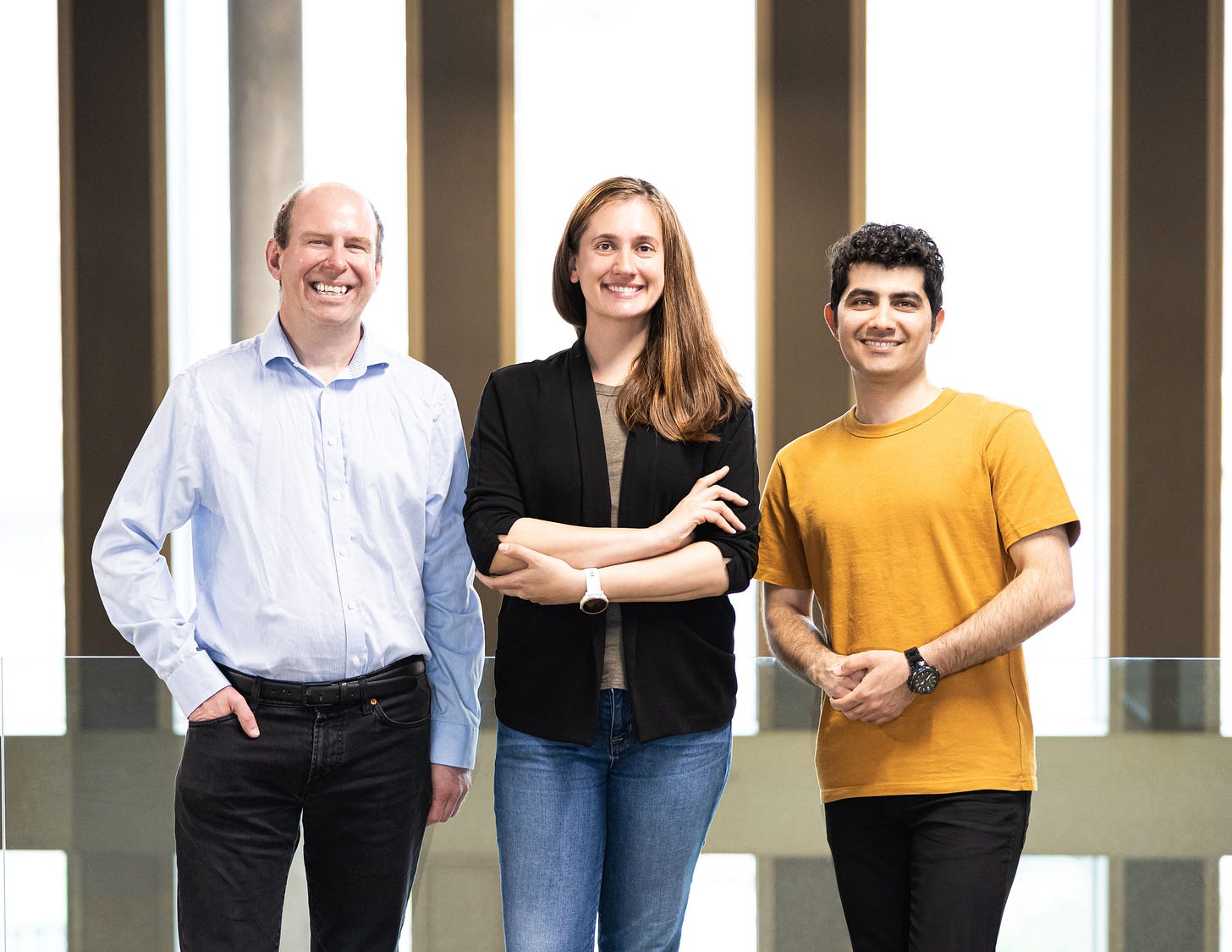
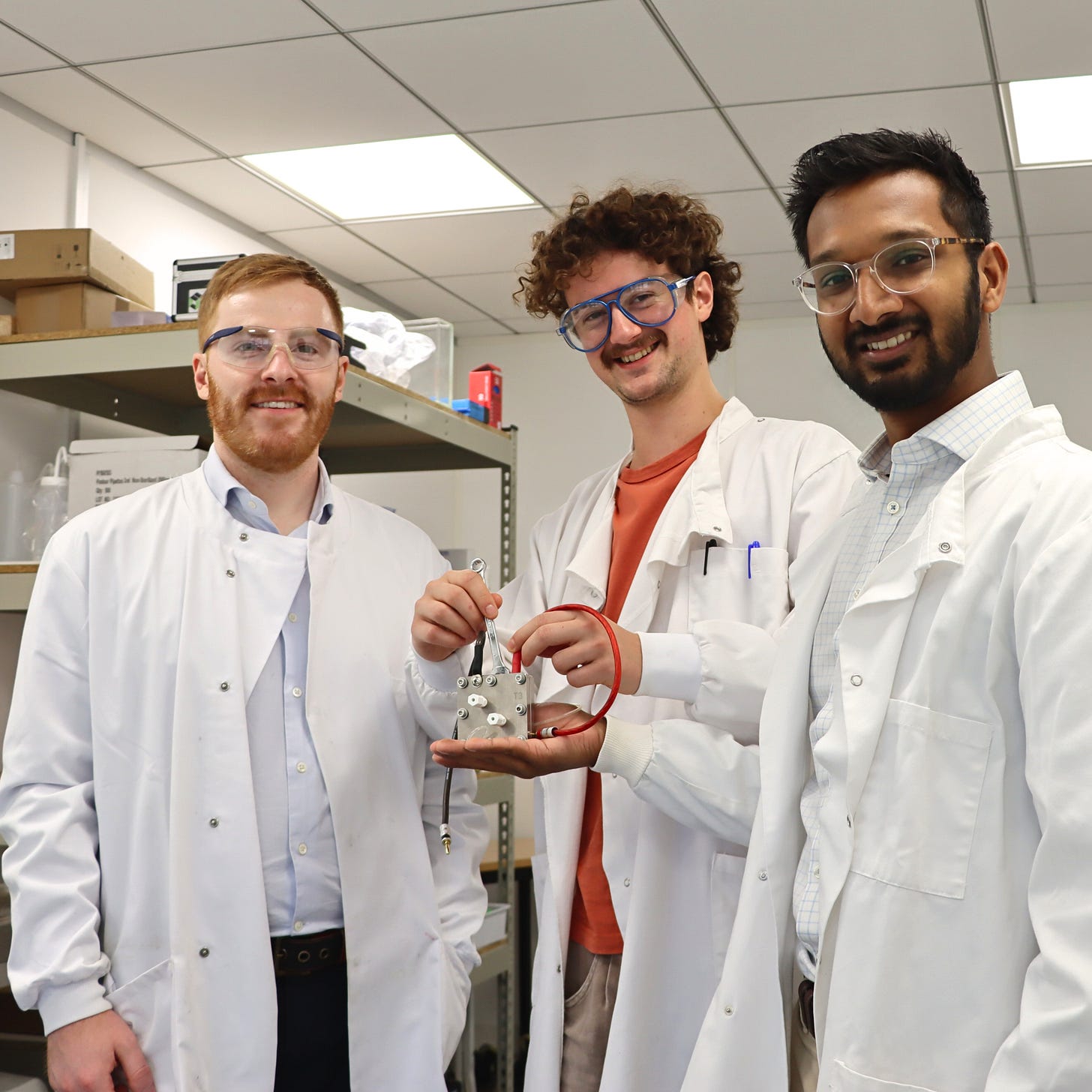
Europe wants to rebuild its industrial sovereignty.
But there’s one critical molecule standing in the way.
Ammonia rarely makes headlines. Yet it’s one of the invisible building blocks of modern manufacturing, used to produce fertilisers, nylon, plastics, resins and countless industrial chemicals. Every day, European factories depend on it. Every day, Europe remains vulnerable to where it comes from.
That vulnerability was exposed almost overnight.
Before Russia’s invasion of Ukraine, around 30% of the EU’s imported ammonia came from Russia. After the invasion, gas prices soared and supply chains fractured -ammonia prices surged with them. Europe’s largest producer, Yara, cut ammonia production to just 35% of capacity, taking 3.1 million tonnes of annual production offline because manufacturing had simply become too expensive.
The shock exposed something much bigger than a fertiliser problem.
Europe had quietly become dependent on importing one of its most important industrial feedstocks, leaving manufacturers exposed to volatile energy markets, geopolitical tensions and fragile global supply chains.
Most people accepted that as the cost of doing business.
Ash Stott and Ben Kyffin didn’t.
After years developing electrochemical technologies at Ceres Power, they became convinced the green ammonia industry was solving the wrong problem.
The whole industry depended on expensive green hydrogen,” Ash explains. “Built, compressed, stored and then fed into a 100-year-old Haber-Bosch reactor. Cut out that hydrogen middleman, and you rewrite the unit economics entirely.
The idea was ambitious.
The journey since then, Ash describes in three words: “Relentless. Focused. Transformative.”
But nature had already shown that it was possible. For millions of years, tiny Rhizobium bacteria living in the roots of legumes have quietly converted nitrogen from the air into ammonia – without giant reactors, extreme temperatures or fossil fuels.
That simple observation became the inspiration behind Rhizo: named after the bacteria itself, the UK startup has developed a patented electrochemical process that produces green ammonia directly from air, water and renewable electricity in a single step.
By eliminating the hydrogen intermediate and the century-old Haber-Bosch process, Rhizo projects production costs of around $550 per tonne – around 30% cheaper than imported grey ammonia, and dramatically below today’s benchmark for imported green ammonia, which can land in Europe at close to €1,000 per tonne once production, compression and shipping are included.
Rhizo is now gearing up to prove that promise in the real world. Backed by a £1 million UK grant and with £1–1.5 million already committed towards its £2 million Seed round, the team is building a 3kW pilot system before deploying its first 10,000 tonne-per-year commercial pilot at the a chemical cluster in the Netherlands.
If successful, it won’t just demonstrate a cheaper way to make green ammonia – it could help Europe free itself from the chains of dependency, in a destabilised world.
“Grey ammonia is responsible for around 2% of global CO₂ emissions,” says Ash. “Knowing every stack we deploy has the potential to remove millions of tonnes of emissions while giving manufacturers more resilient supply chains makes the late nights worth it.”

In one sentence: what is Rhizo PTX, and what mission are you racing to achieve?
Rhizo PTX aims to decarbonise industrial chemicals with cheaper, decentralised green ammonia made directly from air, water and electrons.
What does the name Rhizo mean?
It comes from Rhizobium, the symbiotic soil bacteria living in the root systems (rhizosphere) of legumes that naturally fix atmospheric nitrogen into ammonia without extreme heat or pressure. We are simply doing electrochemically what nature perfected millions of years ago.
What did you see at Ceres that pointed you toward green ammonia?
Ceres taught us how to scale solid-state electrochemistry out of the lab into automated manufacturing. But green ammonia had a structural flaw: the whole industry depended on expensive green hydrogen – built, compressed, stored, then fed into a 100-year-old Haber-Bosch reactor. Cut out that hydrogen middleman, and you rewrite the unit economics entirely.
What was the moment Rhizo PTX became real, not just theoretical?
We were testing cells at home and got ion chromatography data back from an external lab confirming our catalyst suppressed the hydrogen reaction and produced ammonia directly at ambient pressure. That’s when it moved from a paper concept to a company.
How did the jump from Ceres to a three-person startup actually feel like?
It’s exhilarating and fast-paced. At Ceres, whole departments handled testing, supply chain, procurement, legal. Here, we’re designing stack components, running tests, setting up governance, and pitching investors, all in the same afternoon. I underestimated the mental bandwidth it takes to switch between deep catalyst physics and commercial structuring.
What’s been the hardest part of the journey so far?
Educating investors who lump all green ammonia into mega-import projects like Fertiglobe. Overcoming that skepticism means bringing people into our Surrey labs and letting the stack data speak for itself.
Rhizo’s claim is bold: eliminate the hydrogen step altogether. So we asked Ash to explain what actually makes their technology different.
Every green ammonia company talks about hydrogen. yours doesn’t. what’s different?
Suppressing hydrogen evolution is incredibly difficult because hydrogen naturally forms much more easily than ammonia.
We developed a synthetic, non-precious catalyst with almost no affinity for hydrogen, forcing the reaction towards nitrogen reduction instead.
Nitrogen passes through a porous electrode where it reacts directly with protons from water split at the anode, producing ammonia at the cathode and oxygen at the anode.
No electrolysers.
No hydrogen storage.
No high-pressure thermal Haber-Bosch process.
We’ve already demonstrated single-step electrosynthesis at benchtop scale and secured our core patent. The next milestone is proving multi-cell durability and grid load-following through our 3kW pilot, which we’re targeting by Q3 2027.
Who are your first customers?
We’re starting with non-agricultural chemical manufacturers – nylon, polymer, rubber and resin producers.
These businesses carry huge supply chain and shipping risks.
We don’t lead with climate ideology. We lead with supply security, local production and price stability.
Walk us through your $550/tonne cost – and where’s it most vulnerable?
Our model assumes 15 kWh/kg energy use, no hydrogen storage or compression capex, and no shipping drag. Somewhere with cheap renewable power, like Morocco, that drops to ~$450/tonne. The biggest sensitivity is electricity pricing and stack lifetime, which is why 40% of our Seed round goes straight into stack durability testing.
Why focus on industrial chemicals before agriculture or shipping?
Agriculture and shipping are bigger markets, but hyper-price-sensitive and slow to adopt.
Non-captive chemicals is a $19B market where buyers already pay a premium and face Scope 3 pressure. Winning there gives us margin and operating hours before we go after the bigger, slower markets.
You’ve also got a wastewater cleaning opportunity that could become a second product-line. How did that emerge?
It actually emerged naturally from the chemistry.
If you have a durable catalyst, removing nitrate from wastewater becomes relatively straightforward.
Utilities already spend money removing nitrates, while the oxygen we produce as a by-product can be used for aeration.It’s a high-margin opportunity that complements our core ammonia business.
Why is timing so important?
European supply chains are restructuring right now.
First-of-a-kind projects matter because they establish the regional standard before competitors have scaled.
That’s exactly what we’re aiming to achieve with our first 10,000-tonne-per-year deployment at Chemelot.
What’s the biggest technical challenge still ahead?
Stack lifetime.
Scaling from modular cells into commercial facilities depends on our catalyst ink and membrane maintaining performance over tens of thousands of operating hours.
What do investors most often misunderstand about Rhizo?
Most assume hydrogen still has to be part of the process because that’s how ammonia has always been produced.
We show them we’re taking the hydrogen atoms directly from water instead.
That changes everything.
What’s your investment thesis in three sentences?
We replace capital-intensive hydrogen production and Haber-Bosch systems with a single-step reactor producing green ammonia on-site at around a 30% discount to imported grey ammonia.
Backed by Ceres Power veterans and £1 million of non-dilutive grant funding, our £2 million Seed round will fund a 3kW pilot to de-risk two active LOIs.
It’s a capital-efficient route towards Series A and ultimately a high-margin licensing business.
Why has ammonia resisted going green for so long?
Grey ammonia benefits from decades-old Haber-Bosch infrastructure that’s already been paid for and runs on cheap natural gas.
Green ammonia has struggled because it depends on expensive hydrogen production before feeding into that same legacy process.
What’s changed is the combination of volatile energy prices, CBAM and a technology that removes the hydrogen step altogether.
The underlying vulnerability is the same one Rhizo is built to remove: Europe’s chemical industry depends on a molecule it mostly has to import, priced in a market it doesn’t control. A reactor that makes that molecule on-site, from air, water and local electrons, is a hedge against sanctions, shipping chokepoints and carbon border politics all at once – not just a cheaper input.
What’s the biggest lesson you’ve taken from Ceres into Rhizo?
Design for manufacturability from Day 1.
Ceres won by building stack architectures that existing supply chains could actually produce, not bespoke lab-only parts. Every component at Rhizo is designed the same way from the start: the mistake we’re avoiding is over-customizing before we’ve validated the supply chain.
Rapid-fire
Mantra or line you come back to when it gets hard?
It wouldn’t be worth doing if it wasn’t difficult.
One daily habit or ritual that keeps you sharp?
An evening walk with my wife and cat (Yes I walk my cat. No she’s not on a leash).
Where does your optimism come from – what are you seeing that makes you believe this actually gets built?
Belief that we can build a better future given enough dedication and cleverness. There is so much demand for this solution, that someone will solve it, and we believe that someone is us.
Who are your role models?
Yvon Chouinard, founder of Patagonia.
Do you have a book recommendation for other climate founders?
Originals: How Non-Conformists Move the World, by Adam Grant.
……………………….If Ash could teleport himself into the future and be anywhere, doing anything he’d be…“Standing inside the Chemelot industrial chemical park in the Netherlands in the 2030s, watching our flagship 10,000 tonne-per-year modular RhizoPTX plant running silently on local wind energy, delivering zero-carbon green ammonia directly into chemical production lines.”
🧪 Rhizo PTX
Sector: Green Chemistry | Industrial Decarbonization | Deep Tech
HQ: United Kingdom
Round: Pre-Seed/Early Seed – £2M equity (£1-1.5M committed +£1M UK grant)
Traction: 2 signed LOIs including a 10,000 t/y Chemelot deployment finalizing, 3 wastewater LOIs in progress (Ofwat, Anglian Water, Surrey Wildlife Trust); backed by Zinc VC and Innovate UK; Oxford collaboration; founding team of ex-Ceres Power electrochemists plus an ex-Shell/BP chairman.
Opportunity: Single-step Direct Aqueous Electrosynthesis produces green ammonia on-site, on-demand at $550/tonne – no hydrogen step, no supply chain, no geopolitical risk – a 45% cost advantage over the €1,000/t imported benchmark. Targets industrial chemical buyers (plastics, rubber, resin, nylon) facing acute Scope 3 and CBAM pressure amid a 7.2M t/y European ammonia supply deficit by 2030.
👉 To connect with the Rhizo founder just get in touch, or connect directly by logging in as an investor on Climate Marketplace.