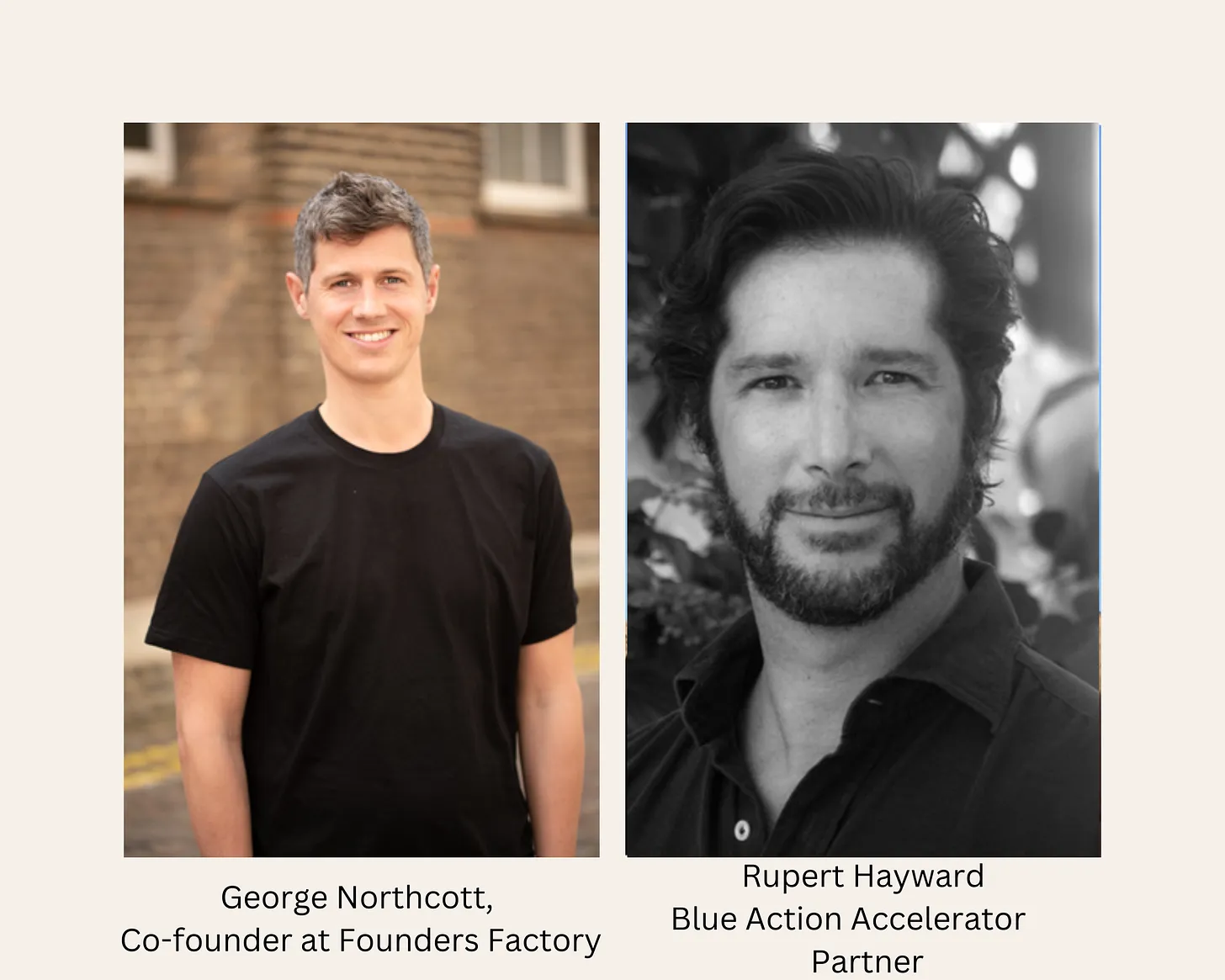
The Blue Action Accelerator, a joint venture with Founders Factory, launched in the Bahamas, focusing on cutting-edge technologies such as ocean alkalinity enhancement and innovative carbon capture solutions. “One of the most exciting technologies we’ve supported,” George Northcott, co-founder at Founders Factory explains, “is a resin that can absorb carbon dioxide from the atmosphere at less than $100 per ton. That’s the kind of scalable solution we need.”
In the Bahamas, rising sea levels, warming oceans, and biodiversity loss are urgent and visible. Island nations face severe threats from climate change, including more intense cyclones, shifting precipitation patterns, and rising seas. The Maldives, for example, could see 80% of its land become uninhabitable by 2050 at current warming rates.
However, as microcosms of larger problems, island nations also offer a unique opportunity to develop and scale climate innovations faster than in larger regions. These islands serve as “living laboratories,” ideal for testing solutions that can scale globally.
“The accelerator was born out of necessity after facing several severe hurricanes, including Hurricane Dorian,” Repurt Hayward recalls. Rupert is director of the Grand Bahama Port Authority, an ocean conservation advocate, and one of the original partners at Salamanca Group with over 20 years investment experience. His journey to creating the Blue Action Accelerator began with completing a green MBA in the U.S. Upon returning to the family business managing the Free Trade Zone in Grand Bahama, he brought a sustainability-focused investment perspective.
The idea was to leverage the inherent advantages of the Free Trade Zone—natural capital, existing infrastructure, partnerships, energy companies, maritime industries, ports, cruise and shipping lines, undeveloped land, and a 90-mile canal system—to accelerate climate technology transfer to Grand Bahama and the surrounding region.
He partnered with childhood acquaintance George Northcott, who had also co-founded Founders Factory 9 years prior with Brent Hoberman and Henry Lane Fox: “When we considered the Blue Economy, we had the expertise in nurturing startups, but we lacked the deep governmental and maritime connections needed to build a programme in this space,” he explained.
“We realised the potential synergy between his team’s expertise in permitting, government relations, and ocean-focused initiatives, and Founders Factory’s strengths in investment and scaling startups,” George explained. “Together, we developed a programme that could truly transform the Blue Economy.”
Eighteen months later, the accelerator has its first cohort of 11 startups and impactful partnerships.
Coral Vita, a startup that won the prestigious Earthshot Prize for its coral restoration work, is an early success story. “We’ve seen the destruction of our reefs, the rubble that used to be living coral,” says Rupert. “With support from Blue Action, Coral Vita rapidly secured permits, launched its operations, and scaled globally, restoring reefs in places like the Red Sea.”
What are your criteria for selecting companies?
We apply an impact lens, prioritising businesses that aim to decarbonise the Blue Economy—especially in the shipping sector and port infrastructure. Our focus is on carbon reduction, pollution mitigation, and solutions for climate adaptation in low-lying coastal communities.
Beyond impact, we look for:
- Technological Edge: Startups should offer innovations grounded in solid research or feature strong scientific talent on their teams.
- Founder Passion: We want founders deeply committed to solving the problem they’ve identified, with a vision to scale their solutions.
- Execution Capability: Many startups excel in research but lack the commercial acumen to scale effectively. We seek teams that can translate innovation into actionable, scalable solutions.
Additionally, we leverage our network of partners—including ports and government agencies worldwide—to validate startups’ potential. For example, in the shipping industry, we ensure that future customers express interest in piloting and deploying these solutions.
What are some examples of startups in your cohort?
- Brineworks Focus: Carbon dioxide removal from seawater using a proprietary electrolyzer technology. This process generates hydrogen, which can be converted into e-methanol, a potential future fuel for the shipping industry. Impact: Combines biofuel production for ships with oceanic CO₂ removal to mitigate global warming.
- Armada Technologies Focus: Advanced lubrication systems for ship hulls that reduce fuel consumption and emissions by creating a layer of air and bubbles around the hull. Impact: Offers a short-term solution with immediate fuel efficiency improvements of 5-8%.
Other startups in the cohort include Acua Ocean, Dolphin Labs, Atmo Cooling, Armada Technologies, Elateq, Drift Energy, Jeevan, Soarce, Ocean Ledger
What stage are startups at when they join your programme?
We invest at the pre-seed to seed stage, providing $150,000 in capital and four months of operating support. We’re comfortable being the first investor in a company spinning out of a university, or joining rounds for startups with existing products and revenue.
We look for a mix of startups:
- Those needing to commercialise proprietary research.
- Those with products close to market fit, where we can accelerate their go-to-market strategy.
How do you support startups?
We provide a robust support system, including:
- Partner networks: introductions to corporates, governments and ports for piloting and scaling solutions.
- Policy and regulation guidance: help navigating permitting and licensing challenges.
- Operational support: strategy, team building and commercialisation expertise.
The combination of Rupert’s expertise in ocean projects and Founders Factory’s experience scaling startups creates a unique ecosystem for impactful innovation in the blue economy.
How does the programme support startups with testing facilities and your network?
George: Governments are introducing regulations to hold major emitters accountable for greenhouse gases. Ports like those we work with, for example, are incentivised to lead on cutting emissions to avoid heavy taxation from regulators such as the IMO or the EU.
Governments are partnering with us to tackle the “carbon crisis” that drives biodiversity loss and ocean heat absorption. We work with them, and with organisations like AltaSea in Los Angeles and a new park in Canada, to identify and implement innovative technologies. These partnerships are formalised through memoranda of understanding (MOUs), enabling technology transfer and solutions that reduce carbon taxation while creating new economic opportunities.
In the Bahamas, we’re helping diversify the economy beyond tourism by using the 230-square-mile Free Trade Zone, which we manage. This setup allows rapid permitting and scaling of environmentally responsible technologies, turning the region into a testing ground for innovations in clean water, decarbonisation and ocean management.
The same approach applies in Barbados, which is positioning itself as a hub for testing and scaling solutions globally.
What worries you most about marine conservation?
Hayward
The rapid pace of climate change is alarming. Coral reefs, which support 25% of marine life, are projected to decline by 90% by 2050 due to rising sea temperatures, acidification, and human activity. Healthy reefs still exist in well-managed areas, but we need responsible development on land and at sea to protect them. Fundamentally, the issue stems from excess carbon, which warms oceans and accelerates reef destruction.
What are solutions you’re excited about?
Hayward
One exciting initiative is the Bahamas’ recent debt-for-nature swap, which redirects savings from lower interest payments into ocean conservation. This funding supports marine protected areas, turning them into well-managed, sustainable ecosystems. To achieve this, we’re identifying cutting-edge technologies like submersibles, drones, sensors, and data systems to monitor, monetise, and conserve marine environments.
Our main funder, Builders Vision, supports this holistic approach to tackling climate and ocean issues by funding everything from philanthropy to late-stage investment. We aim to scale technologies that address ocean conservation and decarbonisation.
What’s a real-world example of a successful blue Action project?
Coral Vita, a company we supported, exemplifies our model. Started by Yale graduates, it developed the first commercial on-land coral farm. With rapid permits and support from the Bahamas government, Coral Vita scaled quickly, winning the prestigious Earthshot Prize and expanding to the Red Sea. This success inspired our broader accelerator model, proving that locally sourced solutions can have global impact.
What’s the long-term vision?
We want to use our partnerships and network to accelerate the deployment of technologies that make a measurable impact—whether decarbonising maritime shipping, conserving marine life, or scaling renewable solutions. By proving these models in regions like the Bahamas, we can expand them globally, creating sustainable ecosystems and economies.