Every founder hits days when nothing goes to plan. A partner pulls out, a prototype fails, or the to-do list grows faster than the team. We asked four climate founders how they’ve handled the hard moments. Their answers have less to do with strategy than with people, purpose and being kind to yourself.
1. Lean on your people
Safia Qureshi, founder of CupClub
We’ve had a lot of great support from the beginning, from investors and a network of advisors.
It’s the things you don’t know how to anticipate that are the hardest. In times of uncertainty, you need to go to these people, sit down, explain the scenario and say: these are the options, what do you think?
These are people who already have experience and can give you their guidance. That’s the best way of building up your resilience in a space with a lot of unknowns.
It’s the things you don’t know how to anticipate that are the hardest.
2. Remember why you started
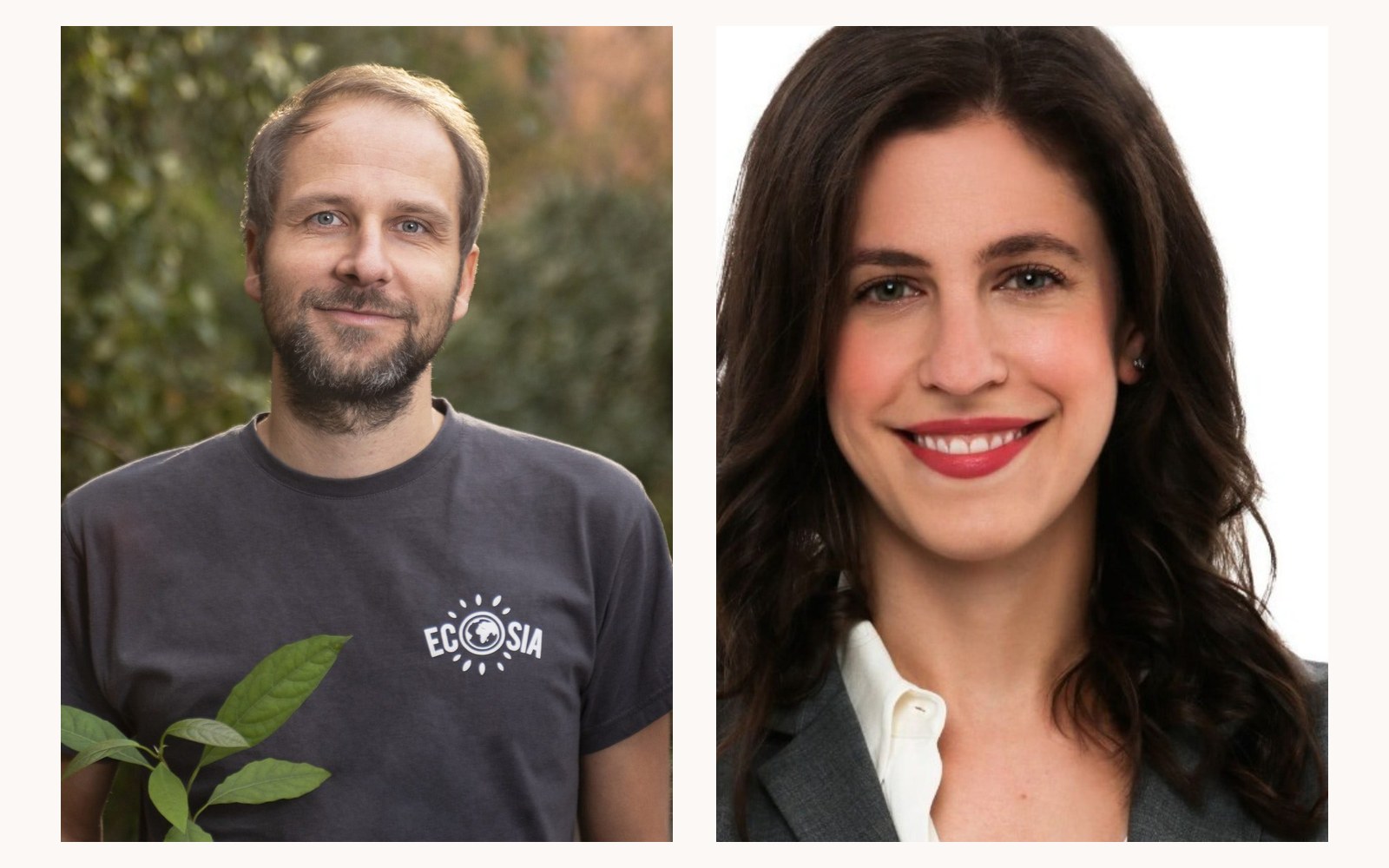
Christian Kroll, founder of Ecosia
I looked at the opportunity cost. I finished university with very good grades, faster than I needed to, and companies were interested in hiring me. I could have made a decent salary, but making money wasn’t so important to me. I wanted to give this a try. I believed in it, and then I just wanted to keep going.
3. Count what you gained, not just what you missed
Jean-Christophe Lambert
Building resilience is very important. When you fail, it helps to look at what you gained, or how you performed, more than at what you didn’t achieve.
It’s not easy to find the right compromise between what can be developed now and where you intend to go. There’s a constant trade-off between market requirements, safety rules and environmental impact, and we challenge it all the time.
When you fail, it helps to look at what you gained.
4. Make peace with chaos
Killian Stokes, co-founder of Moyee Coffee
You will always have one project that’s unfinished. You can’t be a perfectionist as an entrepreneur.
It’s like being in a kitchen learning how to spin plates. You’ve got five or six sticks in front of you. Maybe four are spinning fine, but on the floor around you are lots of broken plates, and there’s this one that keeps breaking. You’re making a process out of chaos.
You can’t be a perfectionist as an entrepreneur.
What to take from this
None of these founders talks about never struggling. They talk about what helps when they do: asking for advice before you need it, holding on to your reason for starting, giving yourself credit for progress, and accepting that some plates will break.
This week, ask yourself:
- Who could I call when the next unknown hits?
- What did I gain from my last setback?
- Which plate can I let wobble for now?
Have you been through a hard stretch and come out stronger? Tell us your story.